



NJPN Webinar Calls Christians from Awareness to Action in Confronting Racism
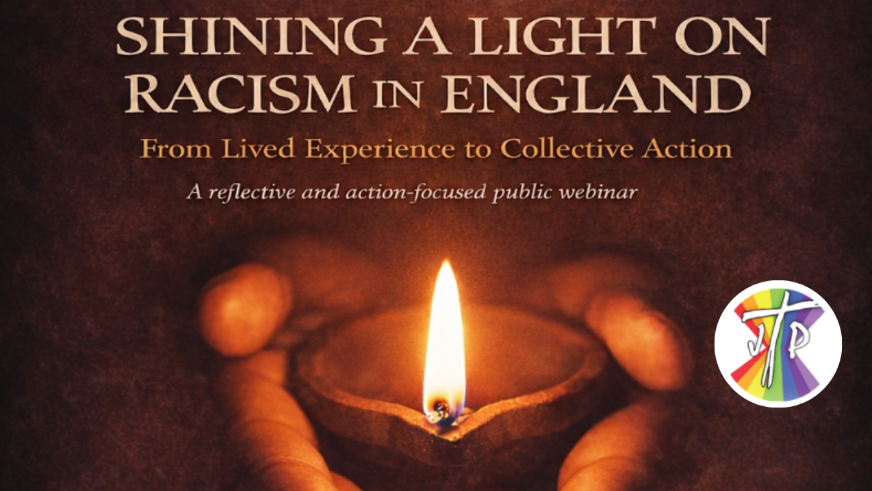
A national webinar hosted by the National Justice and Peace Network (NJPN) has urged Christians to move beyond reflection to concrete action in confronting racism in England, grounding anti-racism firmly in Gospel discipleship and Christian hope.
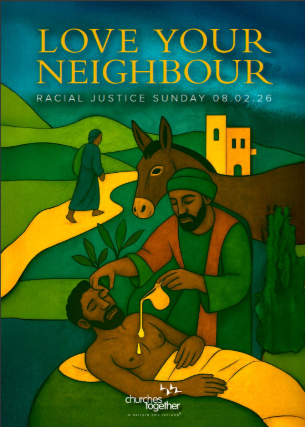
The online event, “Shining a Light on Racism in England: From Lived Experience to Collective Action,” brought together church leaders, theologians, campaigners and community practitioners just days before Racial Justice Sunday. It formed part of a wider ecumenical call for renewed commitment to racial justice under this year’s theme, “Love Your Neighbour.”
Opening the evening, NJPN Chair Anne Peacey welcomed participants and stressed that racism in the UK remains a present and structural reality, affecting employment, education, housing, healthcare and the criminal justice system. It is expressed not only through overt hostility but also through patterns of exclusion and everyday “othering.”
The webinar combined lived experience, theological reflection and practical challenge, creating space for what Brian O’ Toole as moderator described as both honest encounter and purposeful response.
Dr Beverley Prevatt Goldstein — academic, historian and long-standing anti-racism advocate — spoke from both personal and professional experience. Born in Trinidad, she was among the first Black women from a mainstream British school to enter Oxford University in 1968. Her decades of work have focused on challenging monocultural narratives and recovering the long history and contribution of African communities in the North of England.
She stressed that at the end of “shining a light” there must be action and consequence. Awareness alone is not enough. She urged Christians not merely to “understand” racism but to “overstand” it — to go deeper than intellectual acknowledgement toward moral clarity and committed response. Racism, she said, must be named truthfully in all its forms and not softened by language that diminishes its reality. She cautioned against the casual use of the term “micro-aggression” where what is experienced is, in fact, racism.
 Dr Prevatt Goldstein highlighted the importance of encounter, recalling a sermon that began simply with an invitation to talk and listen. Genuine encounter, she suggested, remains one of the most powerful tools for change. “We are all part of the one human race,” she reminded participants, despite belonging to many overlapping groups and identities.
She encouraged participants not to avoid difficult conversations in their parishes and communities. “Too many people know racism, live racism and feel it,” she noted, adding that allyship is essential because there must be a gathered and collective reaction to the outrage of racism. Persistent love, she said, remains a force capable of overcoming it — but only if it is active and organised. Attending a webinar, she warned, is not the work; it must lead to what follows.
The second keynote speaker, Richard Reddie, Director of Justice and Inclusion at Churches Together in Britain and Ireland, addressed racism in the context of migration, asylum and public discourse. He spoke candidly about the social and political climate, arguing that progress on racial justice has stalled and, in some respects, reversed over the past two decades.
He warned that political rhetoric increasingly presents toughness toward migrants, refugees and asylum seekers as strength, while portraying compassion as weakness. Such narratives, he said, distort both social reality and Christian teaching. For the Church, anti-racism is not optional but integral to discipleship and public witness.
Mr Reddie, who has helped develop national Racial Justice Sunday resources, suggested that racial justice should not be confined to one Sunday each year but embedded in the Church’s weekly life. Christians, he said, are called to be “justice seekers” whose actions are intentional and prophetic, not merely rhetorical.
He challenged participants to carry forward three questions — the “3 Rs” — after leaving the comfort of the webinar: What will you remember? How will you reflect? How will you respond?
Participants then moved into breakout groups to consider a practical question: how they could “shine a light on racism” in their own local contexts during the coming year. Feedback highlighted the need for deeper listening, parish-level education, stronger allyship, and partnerships with communities directly affected by racism.
Reflective feedback framed the evening, emphasising that Christian hope is not passive but transformative. Beverley reminded us that activity does not amount to transformation unless it redistributes power, shifts risk and interrupts harm.
The consistent message throughout was clear: confronting racism is intrinsic to the Christian calling to love one’s neighbour and uphold human dignity. Churches were urged not only to speak but to act — with courage, persistence and hope as we strive to act justly, to love tenderly, and to walk humbly with our God.
Brian O’ Toole
February 6th 2026